16 January 2011

The Aviator Interiors


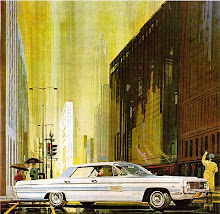
Whilst I was searching for photos that would do Kelly-Marie's post on the Aviator justice I came across a piece in Architectual Digest and decided the interiors definitely needed their own post. For the Aviator production designer Dante Ferretti collaborated with set decorator Francesca LoSchiavo. The photo above depicts their vision of the Cocoanut Grove. Ferretti and LoSchiavo used historic photographs and documentary films to recreate the elaborate, exotic style of the infamous night club.

Leonardo DiCaprio and Kate Beckinsale, playing Howard Hughes and Ava Gardner, on location in the living room of a 1928 Hollywood house by architect Lloyd Wright.


The Wright house courtyard

“I try to interpret periods. I try to think, How did people live?” Ferretti says.

The stylized office belonging to Hughes’s rival Juan Trippe, head of Pan Am Airways. A beautiful room even for a rival.

They Don't Make Them Like They Used To Part I


That green dress in Atonement, those waistcoats in Annie Hall, the suits in Inception and, obviously, Peggy, Betty and Joan. While other people may gasp at car chases or fawn over anything with fangs and a six pack, when it comes to films, for me it’s always been about the costume. Luckily it turns out I’m not the only one. Kelly-Marie and Liz came to visit me the other week and over tea and rose infused cupcakes we landed on the idea of costume in film, and our all time favourites. Did it matter if the pieces of costume were accurate if the feel was spot on? Do converse allstars really belong in Versailles? And when it comes down to it, who needs a story line when you have endless spats and tulle?

And so we decided on an assignment: we would each post our favourite films for costume. Whether it is for historical accuracy or ability to capture a zeitgeist in costume detail, the only rule was that the costumes would be our favourite part.

Kelly-Marie is first up with the epic Aviator and the stunningly original Footlight Parade.

The Aviator (2004)

Modern day adaptation of the 1920's-1940's:

Leonardo DiCaprio as Howard Hughes, Jude Law as Errol Flynn and Cate Blanchett as Katharine Hepburn.
The leather makes the man.
Kate Beckinsale as Ava Gardner


Gwen Stefani as Jean Harlow
Great tash action Jude.


I choose this one because it takes you through three era's and gets everyone absolutely spot on.
Martin Scorsese took on such a massive task when he decided to make this film. Howard Hughes is such an iconic figure in Hollywood and his love affairs with various Hollywood starlets are so well documented. I don't know how he would have started to even think about casting modern day Katherine Hepburn's and Ava Gardener's, but he did and thank goodness he did it SO well!
Kate Beckinsale as Ava Gardner has become one of my everyday style icons (those hats)! and Leonardo Decaprio in flight jackets and plus fours... need I say more... Dream Boat!

The costumes are spot on and the sets are an absolute dream come true, I would have killed for a job on set of this film, imagine getting to hunt for all those Art Deco Interiors. They even brought to life the famous Coconut Grove night club, which I have long been fascinated with because of it's kitsch interior and tragic demise. It looked exactly as I imagined it.
I never get tired of watching this film, it's a feast for the eyes in every way imaginable.


FootLight Parade (1933) and any film by Busby Berkeley


Dick Powell and Ruby Keeler looking cute as a button.


'We're in the money'

I have choosen a Busby Berkeley film because visually, in my opinion, you can't get much better.
His films for me are pure self indulgence, if I am feeling down I will watch one and they make me feel instantly happier, they are pure and utter escapism.

I feel they sum up the 1930's for that exact reason. They show how far Hollywood pushed their creative and finacial resorces, making breathtaking pictures for people to escape to in times of great depression. A lot of the story lines start out with penny-less Chorus girls looking for work during the depression. The Gold digger's song 'We're In The Money' (Gold Diggers of 1933) was a tongue in cheek way of 'keeping it real'.

For me it is all about the visuals, and the waterfall scene in Footlight parade is awe-inspiring! The costumes and sets in his films opitimise the lavish glamour of 1930's Hollywood and the choreography he is so famous for literally makes my heart skip a beat.

"As a backstage musical, this one has all the glitter and the darker side of this theatrical world. There is also some historical interest, since it portrays the making of a "Prologue" which was a shortened version of a full scale musical, designed to thrill audiences before the showing of a motion picture. Acting as promotions, these prologues were part of the shift in the American entertainment scene from the silent picture to the talking picture. The first hour of this production provides insight into the theatrical world of the early 1930s."

Quote by Harry Warren


Kelly-Marie
A Harem of Peacocks

15 January 2011

Sorry I Wasn't Listening


"[Change is] the only evidence of life."
Evelyn Waugh, Brideshead Revisited.

Have just finished reading this article on the Guardian. It's a great article for what it is approaching and all I can say is I hope my printer ink arrives soon. Even the comments written at the bottom of the article mean the author has to change the text, apologise beneath her writing for not doing enough research... to me this is nothing but indicative of how the internet is changing how we write to communicate. But obviously I'm not one of those weirdos that spends all their time writing on the Guardian comment sections... just reading them.

"Instructions every novelist gets from his or her publisher these days: You need to be on twitter, on facebook, blogging. The fact [is] that authors are able to write books precisely because they aren't spending hours every day online. [This] tends to get lost in the hunt for new ways to shore up sales." Laura Miller, How novels came to terms with the internet.
How would you like to reply? By blog, comment or twitter? Because you know your opinion only counts if you voice it. Blog it is then...


In Evelyn Waugh's Vile Bodies there is a scene in which Adam and Nina have a completly transcribed telephone conversation.

Adam rang up Nina.
'Darling, I've been so happy about your telegram. Is it really true?'
'No, I'm afraid not.'
'The Major is bogus?'
'Yes.'
'You haven't got any money?'
'No.'
'We aren't going to be married to-day?'
'No.'
'I see.'
'Well?'
'I said, I see.'
'Is that all?'
'Yes, that's all, Adam.'
'I'm sorry.'
'I'm sorry, too. Good-bye.'
'Good-bye, Nina.'
Later Nina rang up Adam.
'Darling, is that you? I've got something rather awful to tell you.'
'Yes?'
'You'll be furious.'
'Well?'
'I'm engaged to be married.'
'Who to?'
'I hardly think I can tell you.'
'Who?'
'Adam you won't be beastly about it, will you?'
'Who is it?'
'Ginger.'
'I don't believe it.'
'Well I am. That's all there is to it.'
'You're going to marry Ginger?'
'Yes.'
'I see.'
'Well?'
'I said, I see.'
'Is that all?'
'Yes, that's all, Nina,'
'When shall I see you?'
'I don't ever want to see you again.'
'I see.'
'Well?'
'I said, I see.'
'Well, good-bye.'
'Good-bye... I'm sorry, Adam.'


Yes it is all a bit Brief Encounter when you isolate the passage but initially this chapter was received with horror and shock that anyone would attempt to put something as frivolous as a telephone conversation in a novel. Whilst reading The Guardian article I couldn't help but be reminded of this chapter. In 1930 Waugh showed that technology was changing the way we talk to each other, but that we are still, essentially, just talking to each other. What is fascinating is how necessary it has become to carry on communicating. The incessant chatter is the best part and I think the hardest to transcribe into something that a publisher wants to bind into 200 pages of fiction.

Vile Bodies is a brilliant portrayal of a tiny microcosm of Inter-war London. Laura Miller spends a lot of the article concerned with how writing about the contempory condition can be timeless... in other words last as a text into the next generation. I feel like perhaps this in itself is a dated idea- we cherish things when they burn the brightest, even for just a number of years or just months. If something is immediately contemporary, at least it will be entirely relevant once. Why be timeless when you can be utterly dated?

14 January 2011

Fav Tumblr Timez


If the Lisbon sisters did tumblrs instead of scrap books and love letters it would be this.

I've been wanting to blog about this tumblr forever. 1) because it's by Lorna who is amazing 2) unlike other tumblrs that are a bit picture vomity it's got a really clear idea all the way through= no vomit.

http://blueberrybunny.tumblr.com/